Unlimited hay
Healthy adults should have constant access to clean grass hay. Heart Hopper Giants feeds locally grown, second-cut orchard grass sourced from Dan Devries, usually available in September. Hay supports digestion and natural tooth wear.
 Back to home
FLEMISH GIANT CARE
Feeding a Flemish Giant takes planning. They need unlimited hay and water, a measured plain pellet, and greens introduced gradually. Use this guide to understand the starting routine.
THE FOUNDATION
Healthy adults should have constant access to clean grass hay. Heart Hopper Giants feeds locally grown, second-cut orchard grass sourced from Dan Devries, usually available in September. Hay supports digestion and natural tooth wear.
Provide fresh, clean water daily. Our breeder recommends temporarily offering a 50/50 mixture of pineapple juice and water to encourage drinking during travel or while nursing. Keep plain water available too, and contact a rabbit-experienced veterinarian promptly if drinking decreases.
Choose a plain, uniform, high-fiber rabbit pellet. Avoid mixes containing colorful pieces, corn, nuts, seeds, or added sweets.
Introduce rabbit-safe greens gradually, one at a time. Approximate calcium by fresh weight, listed from lower to higher:
Carrots are not high in calcium, but they are high in natural sugar. Offer only a small piece as an occasional treat.
Lower calcium → high calcium High calcium does not mean forbidden. Rotate these greens to avoid a high-calcium daily intake. Values are approximate; variety and growing conditions can change calcium content.
ADULT STARTING MEASUREMENTS
Use a standard 8-fluid-ounce measuring cup. These are practical starting points for healthy, nonbreeding adults—not prescriptions. Follow the pellet label and a rabbit-experienced veterinarian, especially for rabbits that are young, elderly, pregnant, nursing, underweight, or ill.
| Adult weight | Plain pellets / day | Leafy greens / day |
|---|---|---|
| 10 lb | ½ cup | 3–4 packed cups |
| 12 lb | ½–⅔ cup | About 4 cups |
| 15 lb | ¾ cup | About 5 cups |
| 18 lb | ¾–1 cup | About 6 cups |
PELLET GUIDELINES
Heart Hopper Giants feeds a plain rabbit pellet with 18% crude protein. The exact amount still depends on the product, rabbit, age, and body condition. Always follow the feed label and veterinarian’s advice.
VERIFIED 18% FEEDS
These are examples of complete rabbit feeds whose manufacturers list 18% minimum crude protein. Check the current guaranteed analysis on every bag before buying because formulas can change.
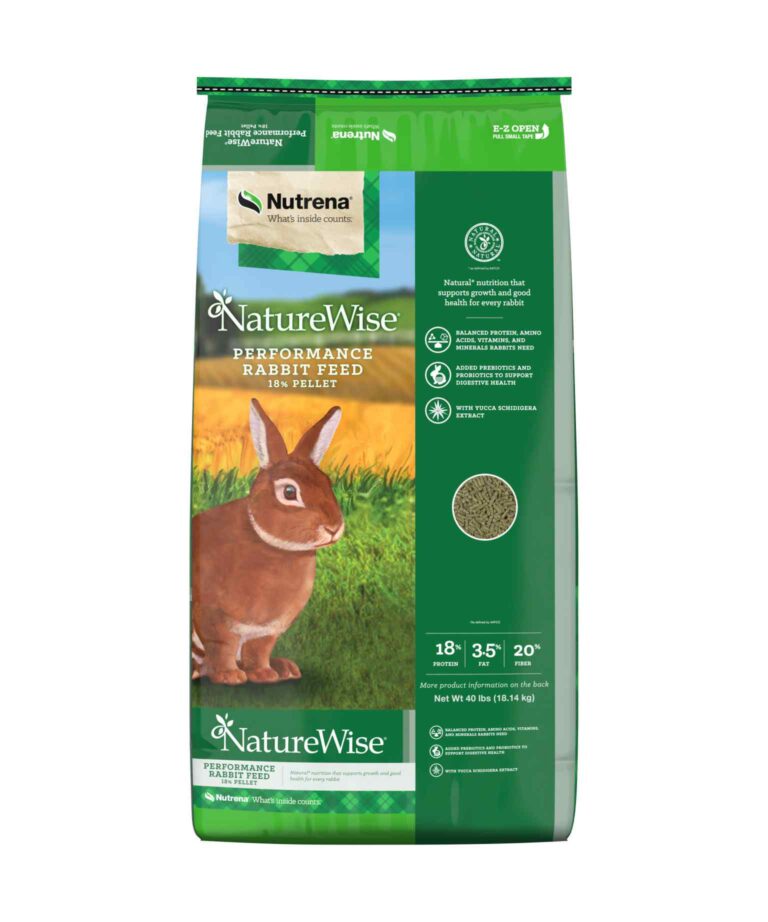
Identified by the manufacturer for growth and developing rabbits, including large breeds.
View manufacturer details →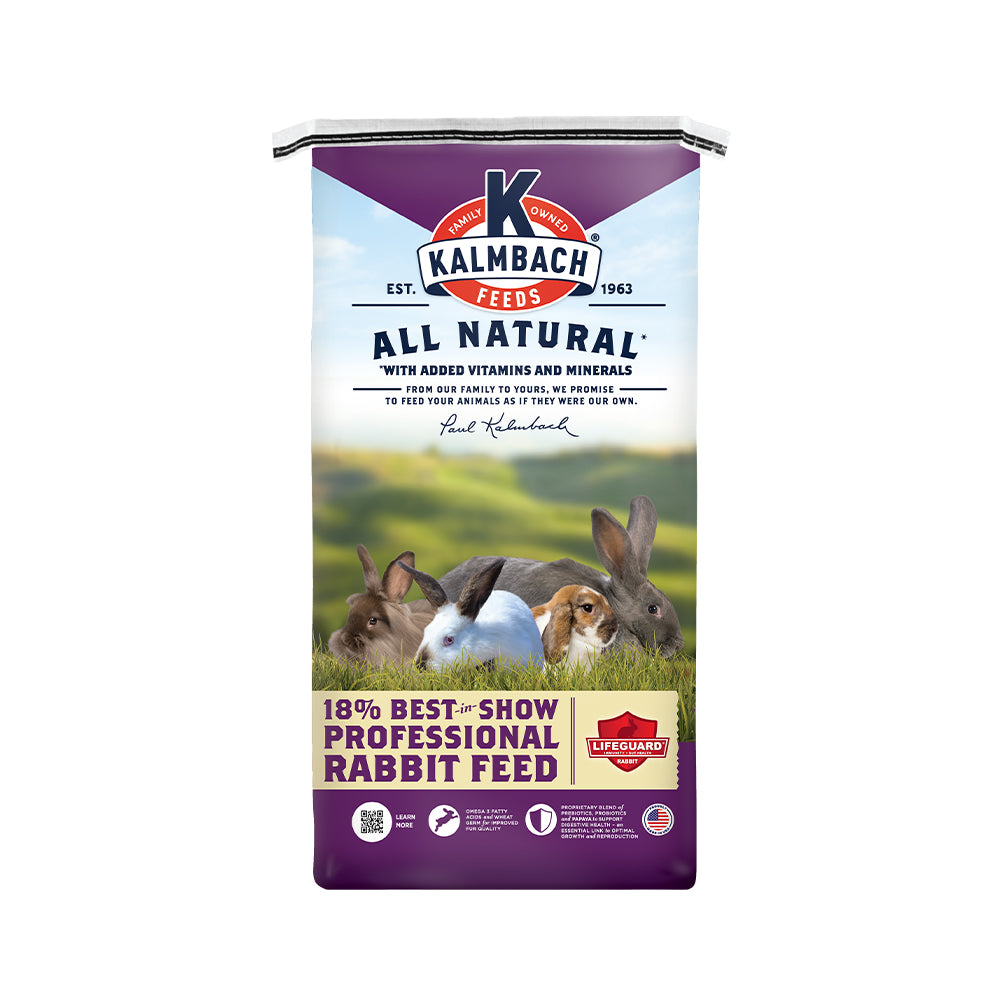
A complete mini-pellet feed listed by the manufacturer for all classes and life stages of rabbits.
View manufacturer details →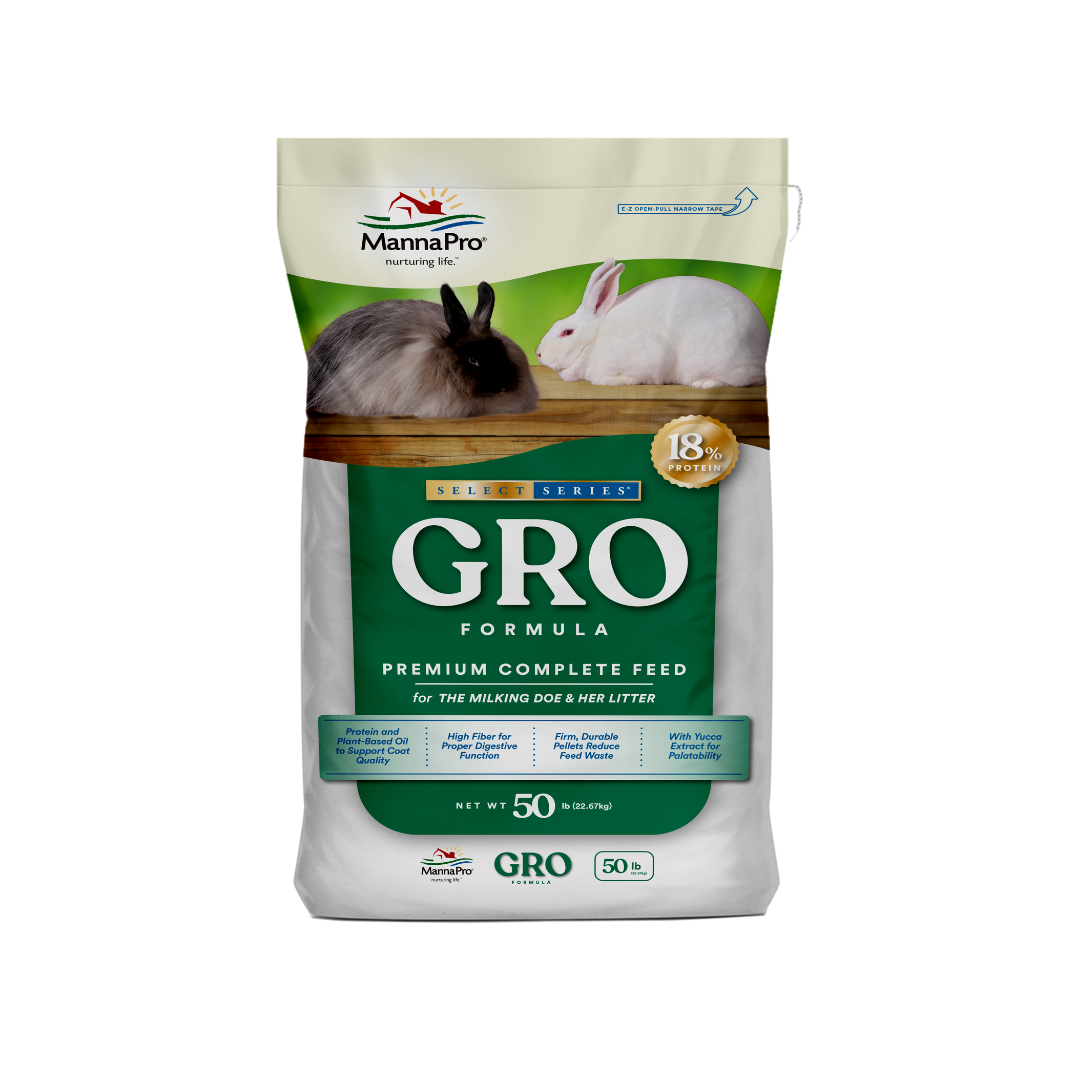
The green-bag growth formula recommended by our breeder for young and giant-breed rabbits. Formulas can vary, so buy it only when the guaranteed analysis printed on the bag lists 18% crude protein.
View current product listing →Changing feeds? Mix the new and old pellets gradually over 7–10 days. Watch appetite and droppings closely.
YOUNG & GROWING
Young Flemish Giants need more concentrated nutrition than mature adults. Alfalfa hay and a suitable growth pellet may be appropriate, but follow the breeder’s routine, the product label, and veterinary guidance.
HEALTHY ADULTS
A healthy adult Flemish Giant generally does best with unlimited grass hay, measured pellets, fresh water, and gradually introduced greens. A starting point may be about ¾ cup of pellets daily, divided into two meals, then adjusted for the individual rabbit.
TREATS & “RABBIT GRANOLA”
Rabbit granola is an informal treat mixture that may contain rolled oats, dried herbs, flowers, seeds, or dried fruit. It should never replace hay or balanced pellets.
For a healthy adult Flemish Giant, keep all concentrated treats small. Young rabbits should generally not receive granola treats.
Loss of appetite, fewer droppings, diarrhea, bloating, or unusual behavior can be urgent in rabbits. Contact a rabbit-experienced veterinarian promptly. This guide is educational and does not replace veterinary care.